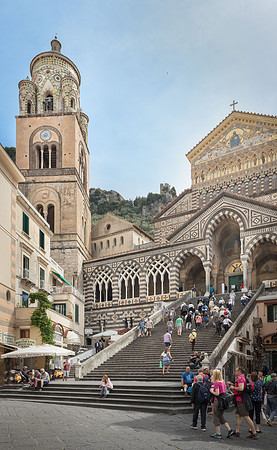
The Cathedral of St. Andrew, Amalfi is a highly unique cathedral full of interesting sights. Built in the early 1200s, the cathedral features a dramatic location atop a steep flight of stairs, an Arab-influenced exterior, and the relics of St. Andrew the Apostle in its crypt. Connected to the cathedral is an older basilica (now a small museum) and the fascinating Cloister of Paradise, both containing medieval murals.
There has been a church on this site in Amalfi since 596 AD and the one built in the 9th century still stands today. The present cathedral (added alongside the old one) was built in the early 13th century to provide a suitable resting place for the relics of St. Andrew the Apostle. Uniquely, the older cathedral was not torn down but left adjacent to the new one. The two were originally joined together to form a single, six-nave Romanesque cathedral.
St. Andrew is the patron saint of Amalfi as well as Scotland and Russia. The brother of St. Peter, Andrew was a fisherman and one of the first apostles. According to tradition, Andrew spread the gospel in Greece until he was executed by crucifixion on a diagonal cross in Patras. Andrew's remains were transferred from Patras to Constantinople around 357 to be placed in Constantine's new Church of the Holy Apostles.
During the Fourth Crusade, Cardinal Pietro Capuano swiped Andrew's relics from Constantinople and brought them to Amalfi. The relics arrived on May 8, 1208 and were placed in the cathedral's crypt, where they remain today. Some other saints' relics arrived at the same time, which are displayed in the cathedral's Chapel of the Relics.
Numerous miracles have been attributed to St. Andrew's intercession over the centuries. On June 27, 1544, a sudden surge in the ocean sunk the ships of Ariadeno Barbarossa, who had attacked Amalfi and Salerno. June 27 has been a feast day in Amalfi ever since.
The Baroque period saw significant changes to Amalfi Cathedral as part of a major renovation. Among other thin